More than 1.2 million tons and a strong boost to the agricultural export system
January 2026 will be recorded as a historic month for our port, reaching a total movement of 1,216,779 tons of merchandise, consolidating the best start to the year in the history of our maritime terminal.
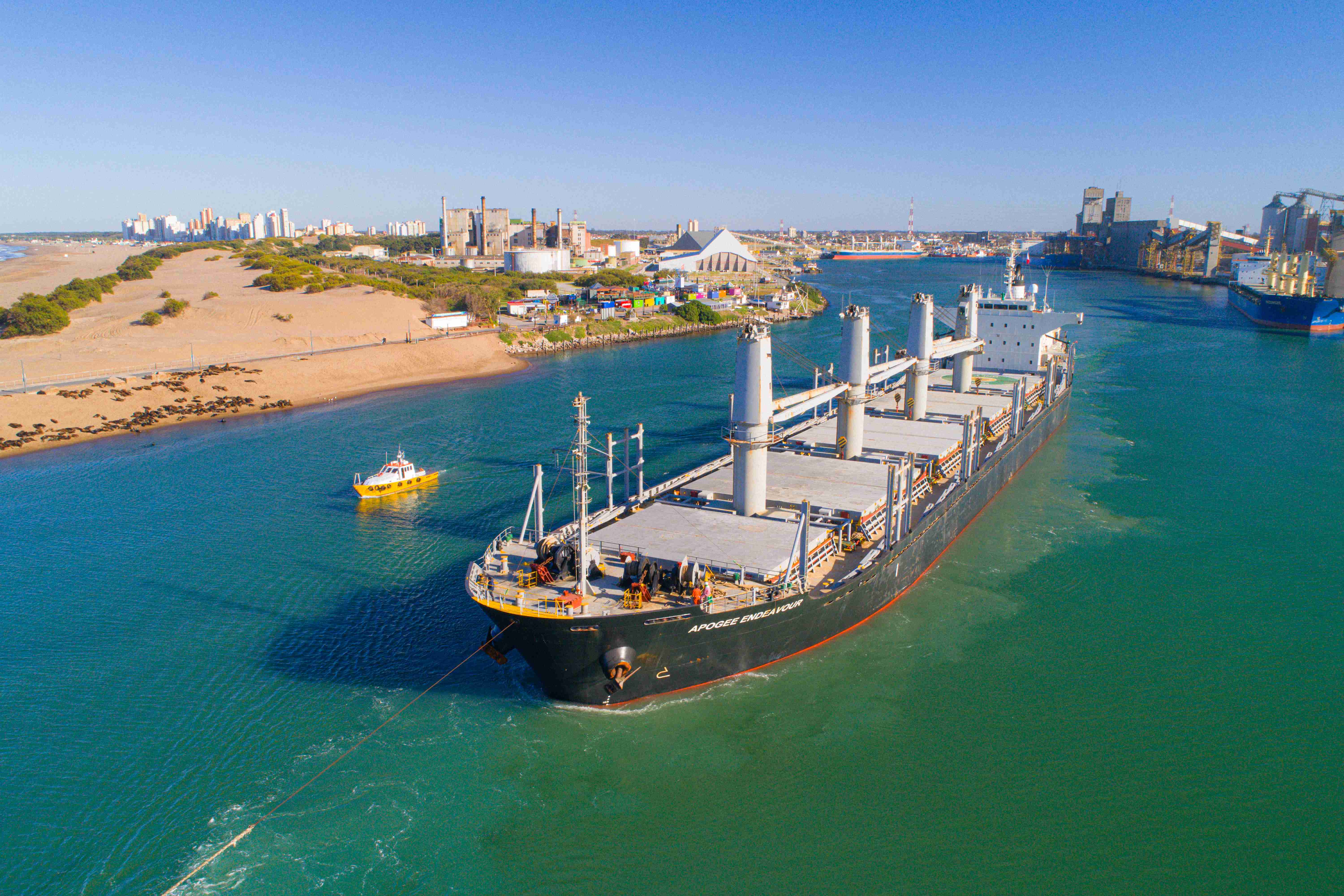
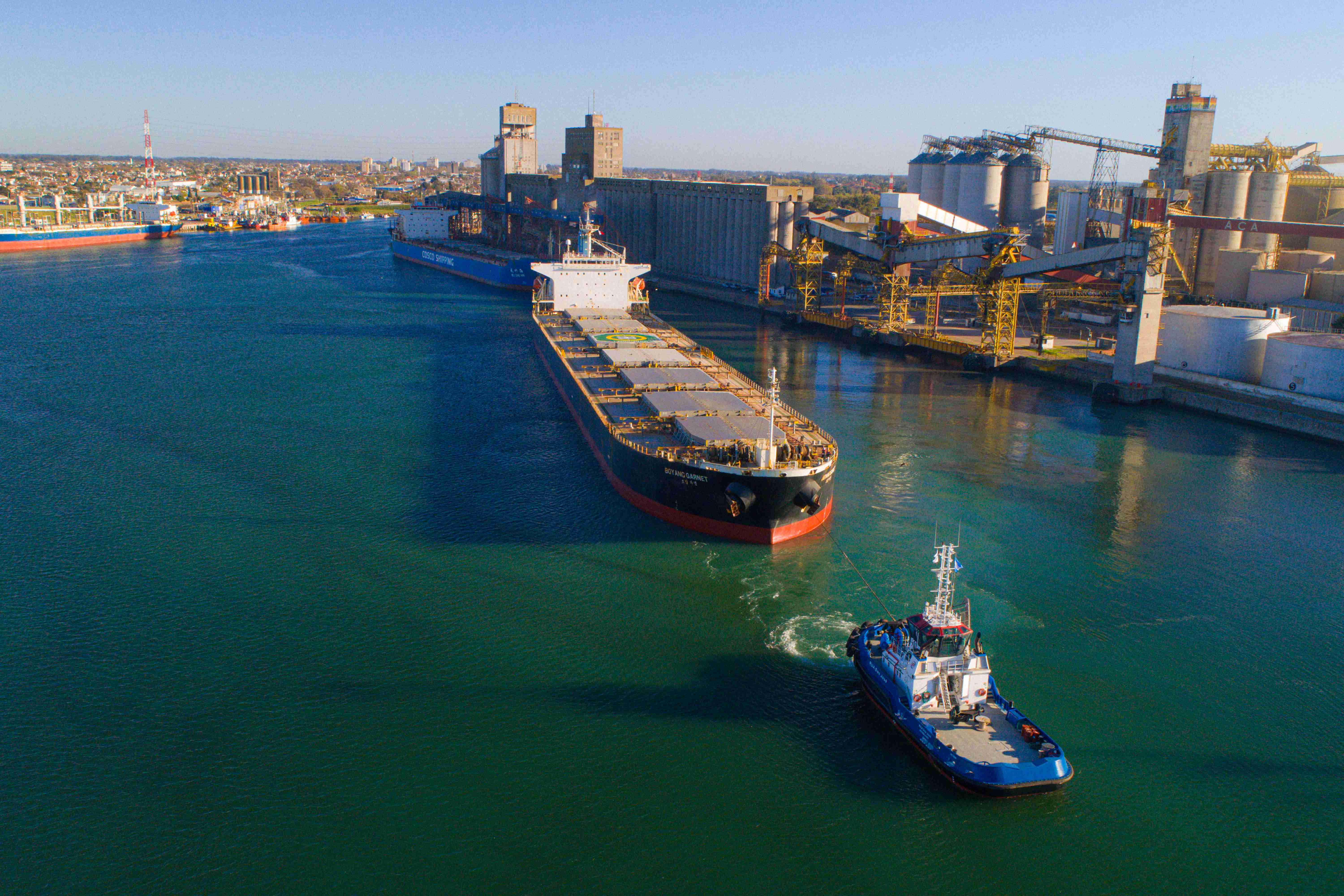
During the period between January 1st and 31st, the port handled a total of 39 vessels, with the longest measuring 229 meters, averaging over 31,000 tons per ship, reflecting efficient and orderly operations aligned with the principles of logistical sustainability demanded by today’s international trade.
This performance reaffirms the strategic role of our port within the Argentine agricultural export system, as a key link in the agricultural export chain, integrating production, storage, logistics, and export to the world’s main markets.
International Destinations and Market Diversification
The analysis by destination country shows a marked diversification of markets, with a strong presence of countries in the Middle East, Asia, and Latin America. Saudi Arabia led the ranking with more than 390,000 tons, representing 32% of total exports, followed by Bangladesh, Vietnam, Brazil, Thailand, Iran, Chile, and China, among other destinations.
This geographic breadth confirms the port’s capacity to sustain constant export flows, strengthening the international integration of the regional and national production system.
Predominance of the Grain Complex
Regarding the type of goods handled, January was clearly led by products from the grain complex, the backbone of the agricultural export chain.
Feed barley was the main exported commodity, with more than 481,000 tons, followed by wheat, which exceeded 403,000 tons, and corn, with almost 140,000 tons. Significant volumes of malting barley, sunflower pellets, and sunflower oil were also recorded.
In parallel, fertilizer imports, such as DAP and MAP, were carried out. These are essential inputs for sustaining the productivity of the agricultural sector, thus completing a circuit that integrates production, export, and domestic supply.
Operational Efficiency and Sustainability
One of the highlights of the period is the high average tonnage per vessel, especially in export operations, where vessels operated at full capacity, optimizing time, reducing logistics costs, and contributing to more efficient and sustainable operations.
This level of performance reinforces our port’s commitment to modern logistics, aimed at improving the competitiveness of the agricultural export system, while protecting resources, the environment, and the efficiency of the entire chain.
A New Year’s Start That Sets the Course
The volume achieved in January 2026 not only represents a monthly record, but also sets a clear course for the rest of the year, with prospects for continued activity, strengthening of international markets, and consolidation of our port as a key player in Argentine foreign trade.
This result is the fruit of the joint work of the public and private sectors: workers, operators, companies, producers, and regulatory bodies linked to the port, who sustain an efficient, integrated, and long-term sustainable agricultural export chain every day.